




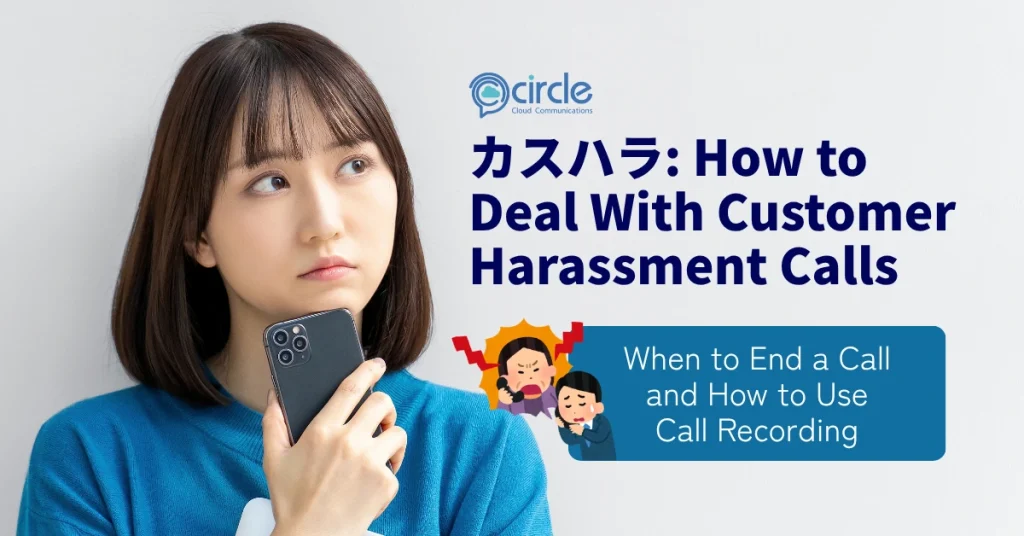
On October 1, 2026, the amended Labour Policy Comprehensive Promotion Act came into force, making measures against customer harassment mandatory for employers, including companies and other organisations. Workplaces that deal with customers or business partners over the phone are also covered.
Now that the new requirements are in force, how should companies handle customer harassment over the phone, and what role does call recording play?
The basic approach is to first understand the caller’s complaint, then escalate the call to a manager when problematic behaviour occurs, and have procedures in place to end the call when necessary. Call recordings provide a record of what was actually said and how the interaction developed, supporting later fact-finding and decision-making.
Source: Ministry of Health, Labour and Welfare, Prevention of Harassment in the Workplace

What Customer Harassment Measures Became Mandatory in October 2026?
The Ministry of Health, Labour and Welfare guidance groups the main measures employers are required to take into five areas.
- Communicating company policy and response procedures: Establish a clear policy of responding firmly to customer harassment and protecting employees, and make sure employees understand what to do when an incident occurs.
- Establishing a consultation system: Decide in advance where employees can seek advice and ensure that the people receiving consultations can respond appropriately.
- Responding after an incident: Confirm the facts promptly, support affected employees, and take measures to prevent recurrence.
- Preparing for serious cases: Establish policies for particularly serious behaviour and create a system capable of putting those policies into practice.
- Protecting privacy and employees who report incidents: Protect the privacy of those involved and prevent employees from being treated unfavourably because they reported an incident or assisted with fact-finding.
It is not enough simply to publish a policy. Companies also need to decide what happens after an employee reports a problem. In a telephone-based workplace, this means defining how staff contact a manager and how calls are escalated or transferred.
Source: Ministry of Health, Labour and Welfare, Customer Harassment Prevention Guidelines, Section 4
The Difference Between Local Customer Harassment Ordinances and National Law
Separate from national legislation, some local governments have introduced their own customer harassment ordinances. Tokyo’s ordinance took effect on April 1, 2025, while Saitama Prefecture’s took effect on July 1, 2026.
The nationwide obligation to implement preventive measures applies to employers regardless of whether their local government has introduced its own ordinance. Local ordinances may contain their own provisions, including differences in who is covered, so businesses should also check the rules and guidance that apply in the areas where they operate.
What Counts as Customer Harassment Over the Phone? The Difference From a Legitimate Complaint
Not every complaint or strongly worded opinion made over the phone qualifies as customer harassment. Under the Ministry of Health, Labour and Welfare definition, all three of the following conditions must be met:
- The conduct comes from a customer, business partner, facility user, or another person connected with the business.
- Considering the nature of the work and the circumstances, the conduct goes beyond what is socially acceptable.
- The conduct harms the employee’s working environment.
This can include calls from business partners as well as calls from ordinary consumers.
Examples of problematic telephone behaviour can include personal abuse or insults, threats to cause harm, unjustified demands for compensation, and persistent repeat calls. Long calls may also become relevant depending on the content of the discussion, whether the conversation is progressing, how frequently the person contacts the business, and the impact on normal operations.
If there is a genuine problem with a product or service and the customer is asking for an explanation or remedy within reasonable limits, the matter should be handled as a legitimate complaint.
However, even where the underlying request itself is reasonable, the way it is made may amount to customer harassment if it involves conduct such as threats or severe personal abuse.
Similarly, asking for reasonable accommodation related to a disability is not in itself customer harassment. Businesses should not make decisions based solely on a person’s tone of voice or the length of a call. The content of the request, the way the person behaves, and the circumstances leading up to the interaction all need to be considered.
Source: Ministry of Health, Labour and Welfare, Customer Harassment Prevention Guidelines, Section 2
If employees currently use their personal mobile numbers for customer calls, it’s also worth reviewing the risks of using personal phone numbers for business and considering keeping business and personal calls separate.
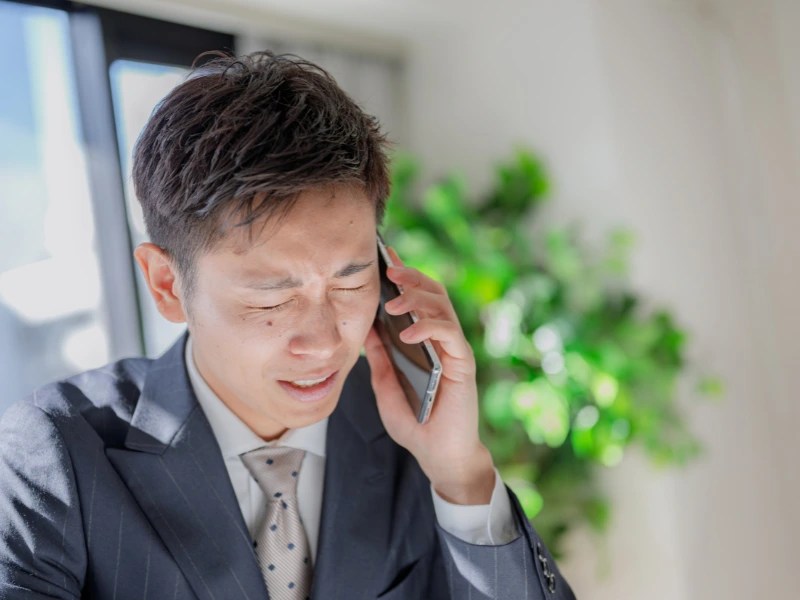
How Should Companies Handle Customer Harassment Calls? Response Procedures and What to Say
The following is an example of how a company can turn its overall policy into a practical telephone response procedure.
If a caller makes threats or engages in other behavior that creates a significant safety concern, completing the normal process should not take priority. The employee should move directly to contacting a manager and protecting their safety.